
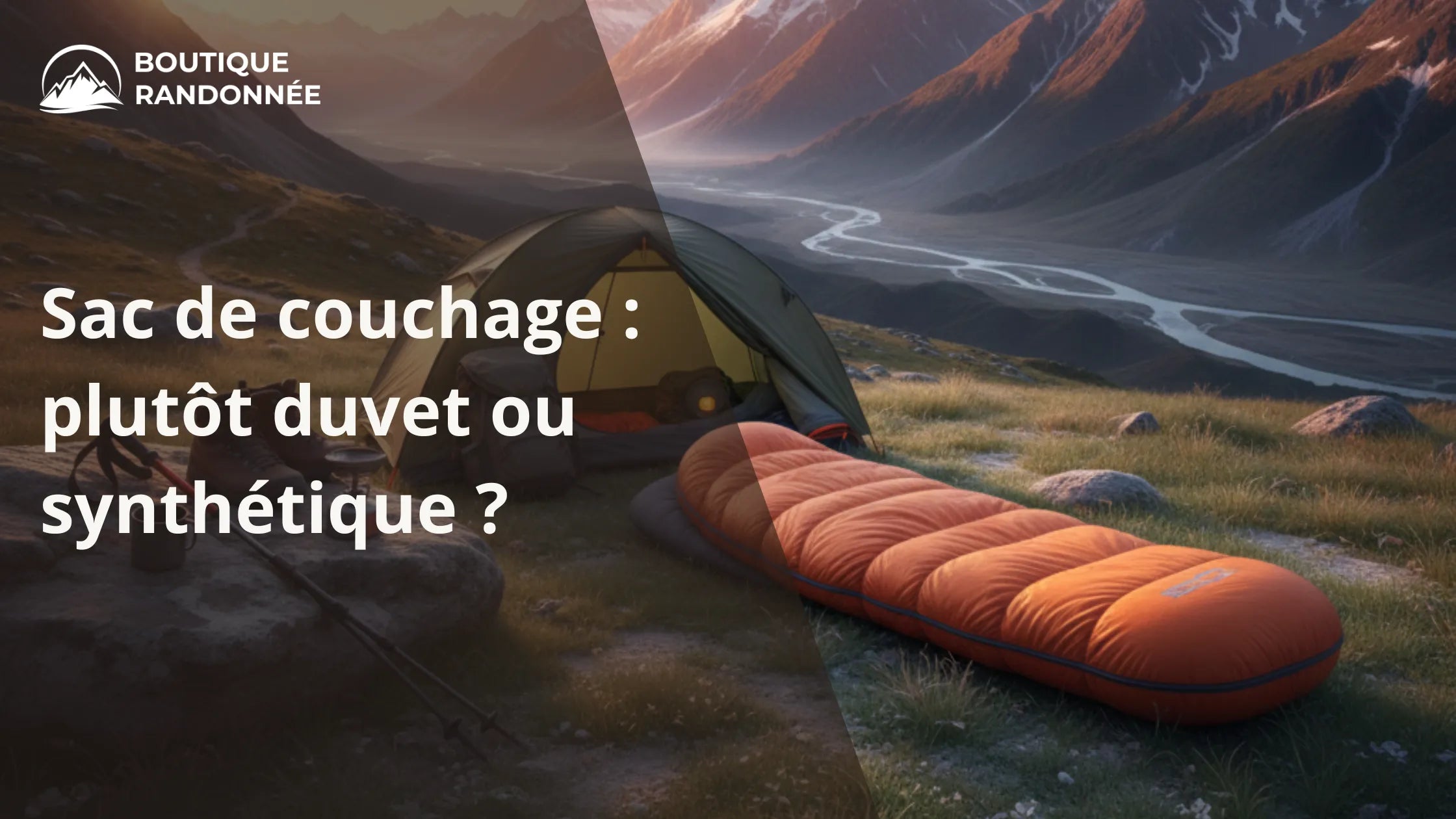
Down vs. synthetic: the guide to choosing your sleeping bag
After a day spent hiking the trails, it's finally time to settle down for the night. The sun disappears, the temperature drops, and your comfort then depends on an essential piece of your hiking equipment : the sleeping bag .
A true nomadic cocoon, it must offer warmth, comfort, and practicality, while remaining easy to carry. Faced with the two main types of sleeping bags —natural down or synthetic fibers—the choice can seem complex. Here is our advice for selecting the model best suited to your adventures.

The down sleeping bag: warmth, lightness and performance
The down sleeping bag is an essential item for hikers and trekkers seeking high thermal performance. It consists of a durable outer fabric, usually polyester or nylon, and a natural filling made of down and goose or duck feathers.
This type of sleeping bag is distinguished by:
- excellent thermal insulation , even in sub-zero temperatures
- an optimal heat-to-weight ratio
- Compact size , ideal for long hikes
The insulating power of down is expressed in cuin (cubic inches). The higher this value, the more air the down traps and the more heat it retains. Sleeping bags are thus classified by comfort temperature: 0°C, -10°C, -20°C, etc.
In our hiking shop , you will find a selection of down sleeping bags suitable for high-altitude bivouacs, challenging treks, and the coldest nights.
It is important to remember, however, that down is sensitive to moisture. In wet or uncertain conditions, the use of a hiking tent is strongly recommended to preserve the thermal performance of the sleeping bag.

The synthetic sleeping bag: versatility and easy maintenance
Synthetic sleeping bags use artificial insulating fibers that mimic the properties of down. Technological advancements have allowed these models to become more efficient and comfortable, while remaining affordable.
The main advantages of synthetic materials are:
- good insulation even in humid environments
- quick drying
- Easy to care for , machine washable
- a generally more affordable price
Unlike down, synthetic insulation retains its insulating properties when exposed to dew, ground moisture, or condensation. It is particularly suitable for hiking in temperate climates , nights in mountain huts, or occasional camping.
Discover: Ultra Comfortable Sleeping Bag - All Seasons

Down or synthetic: how to choose?
Down is the preferred choice if you are looking for maximum insulation, reduced weight and minimal bulk, especially for outings in the mountains or in very cold weather.
Synthetic materials are recommended if you operate in humid environments, if you frequently sleep in shelters, or if you want equipment that is easy to maintain and more economical.
Whatever your choice, it's essential to select a hiking sleeping bag suited to the actual conditions of use. Inaccurately estimating nighttime temperatures can compromise comfort and safety.

Optimize your comfort for nights in the great outdoors
The trekking sleeping bag is a central element, but it benefits from being complemented by other equipment.
A sleeping mat provides effective insulation against the cold and improves sleeping comfort. Various models are available: foam, inflatable, self-inflating, to be chosen according to the desired level of comfort and acceptable weight.
The sleeping bag cover provides additional protection against wind and moisture, especially when bivouacking without a tent.
Finally, the hiking tent A tent or bivouac hammock provides essential shelter depending on your activity. A tent offers effective protection from the elements, while a hammock provides a lightweight and comfortable alternative, provided it is well insulated.