
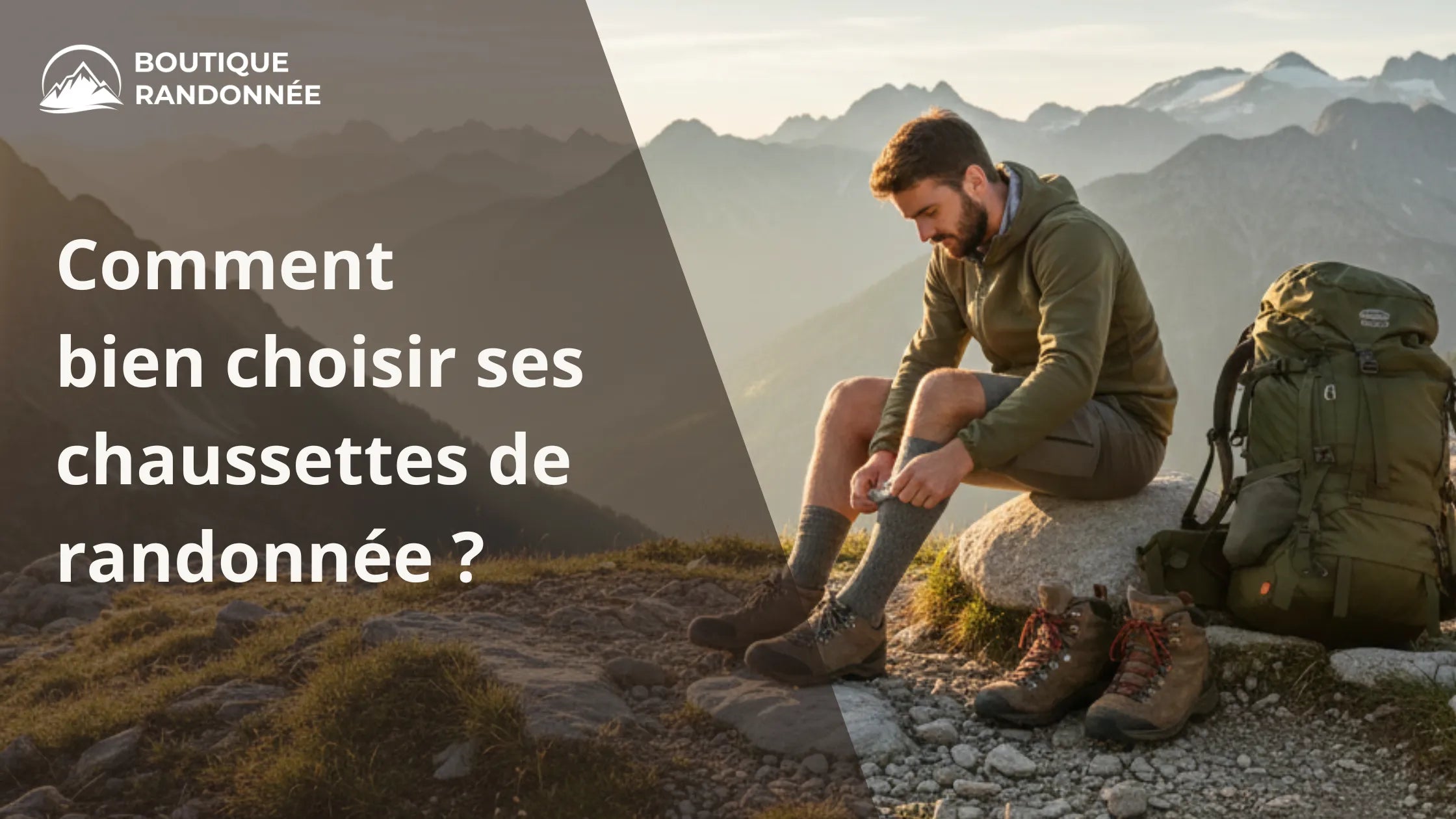
How to choose the right hiking socks?
Have you found the ideal hiking shoes to accompany you on the trails? Perfect! But be careful, one often underestimated detail can make all the difference during your outdoor outings: hiking socks .
Too big, poorly suited to the season or made of bad materials, they can quickly turn a nice hike into an ordeal… blisters, chafing, wet feet.
At Boutique Randonnée , we guide you to make the right choice and enjoy optimal comfort , whatever your activity: day hike, multi-day trek or mountain bivouac.

Shoe size: the foundation of comfort
The first essential criterion is the correct size . A poorly fitting sock can create creases in the shoe, causing pressure points, irritation, and blisters.
Most hiking socks are available in size ranges (39-41, 42-44, etc.). If you're between sizes, it's generally best to choose the smaller size, especially if the material is stretchy. A sock that's too big will slip down and bother your foot with every step.
Discover our selection of hiking socks suitable for all shoe sizes to avoid any unpleasant surprises.

Height: protect your foot and ankle
Hiking socks come in low, mid-calf, or high versions. The goal is simple: to avoid any direct contact between the shoe and the skin .
The sock should always extend beyond the collar of the shoe to limit friction.
- With high-top shoes: opt for knee-high socks.
- With low shoes: knee-high socks remain an excellent choice
They protect the ankle from friction and grass, and provide extra warmth when temperatures drop.
Adapt your socks to the season
Like the rest of your gear, your socks should be chosen according to the weather conditions .
-
In winter or cold weather : opt for thick, insulating socks that retain heat while wicking away moisture. Ideally, choose merino wool socks or heated socks for those who are particularly sensitive to the cold.
-
In summer or dry weather : opt for thinner, lighter and very breathable socks to keep your feet dry.
- In wet weather : waterproof socks are an excellent solution to keep feet protected from water and cold.

Materials: a strategic choice
Comfort also depends on the composition of the socks .
Synthetic materials (polyamide, polyester, elastane, etc.) are highly valued for their ability to wick away perspiration and dry quickly. However, they often require antibacterial treatment to minimize odors.
Merino wool , on the other hand, is a safe bet:
- excellent thermoregulation
- breathable
- naturally antibacterial
- comfortable even when wet
Cotton, on the other hand, is strongly discouraged for hiking: it retains moisture, dries slowly and promotes the appearance of blisters.
The right compromise? A blend of synthetic fibers and merino wool , adapted to your season and walking time.
Construction: the detail that changes everything
Last but not least: the design of the sock .
Certain features really make a difference on the field:
- breathable zones on the instep
- reinforcements at the heel and toes
- Seamless socks to minimize friction
- Double-layer socks (anti-blister), ideal for long distances
These details significantly improve comfort and reduce the risk of irritation, especially during prolonged hikes or treks.
The advice of Boutique Randonnée
Good socks are just as important as good shoes. They protect your feet, regulate temperature, and prevent many discomforts. Take the time to choose them according to the season, your activity, and your individual needs .
Find in our shop a wide range of wool hiking socks, waterproof and heated, as well as all the necessary hiking and camping equipment to set off on your adventure with peace of mind.