
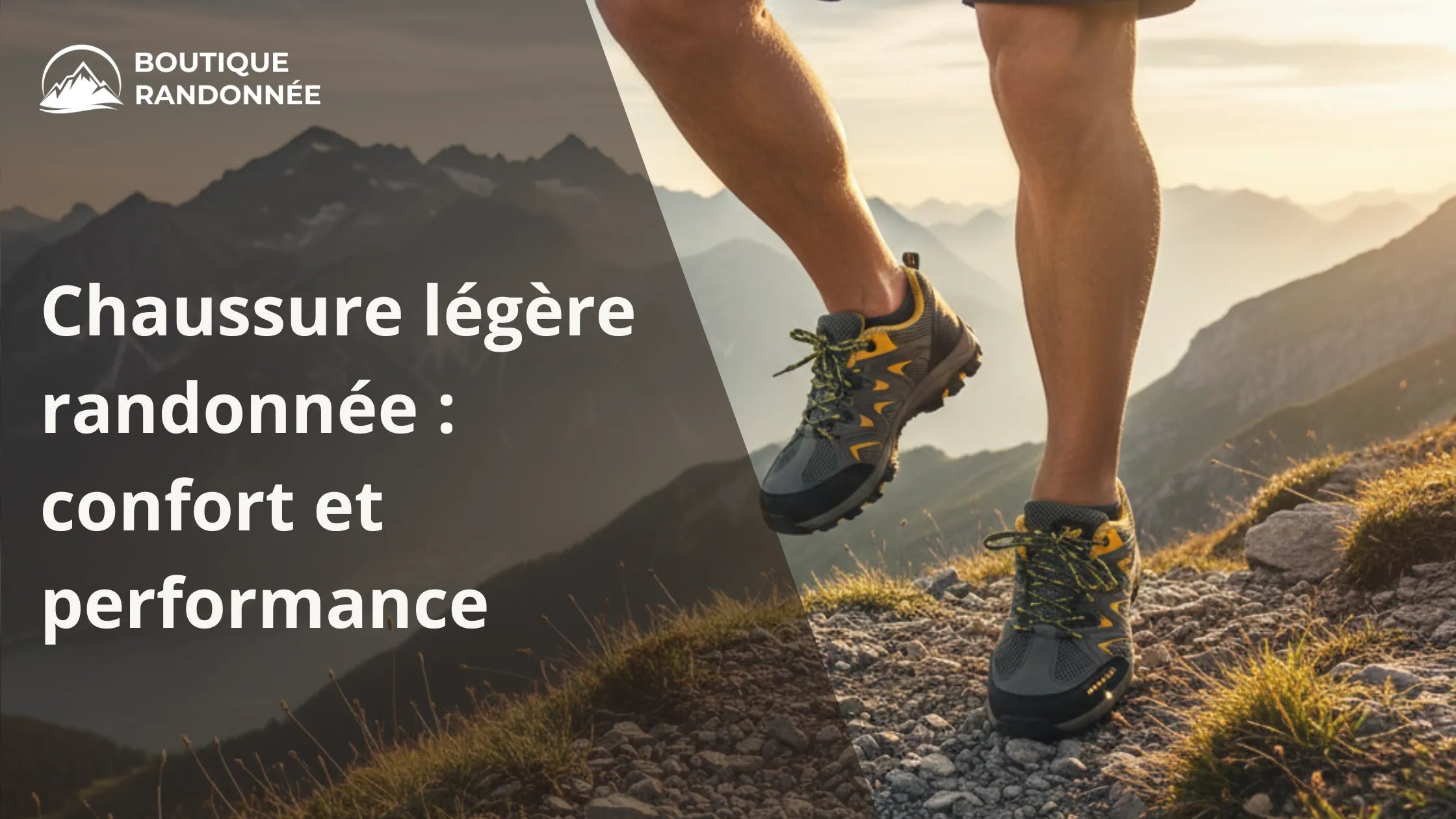
Lightening your feet transforms the way you walk. When hiking , every gram counts: lightweight shoes free up your stride, improve comfort, and allow you to go further without fatigue. More fluid and natural, walking becomes a lasting pleasure, whether on easy trails or more challenging terrain.
At Boutique Randonnée , we select lightweight hiking shoes designed to strike the perfect balance between comfort, support, and performance, without compromising on reliability. Whether you're hiking for the day, trekking in the mountains, or undertaking challenging hikes, the right footwear makes all the difference.
Discover our selection of:

Why choose a lightweight trekking shoe?
Choosing lightweight walking shoes reduces the effort required with each step. Less inertia means a more dynamic walk, better posture, and reduced muscle fatigue, especially over long distances.
Less fatigue, more endurance
A lighter shoe naturally supports the foot's movement. Ascents become faster, descents more controlled, and the ankle works in alignment. Over a full day, this benefit accumulates, allowing you to conserve energy until the very last kilometer.
A smoother stride
With reduced weight, the foot lands more precisely under the center of gravity. Push-offs are more efficient, balance more stable , even when the pace changes or the terrain becomes uneven.

Thermal comfort and breathability
Mountain hiking shoes are distinguished by their thinner, more breathable uppers. These limit overheating, promote moisture wicking, and dry more quickly after exertion.
Result :
- drier feet
- less odor
- lasting comfort during several hours of walking
Low-cut models are particularly popular in warm weather, while mid-cut versions offer an interesting compromise between ventilation and protection.
Versatility on a daily basis
Hiking boots aren't just for trails. They easily adapt to other uses:
- day hikes
- brisk walking
- travel and active walks
Its flexibility and comfort allow you to move from the trail to the city without feeling constrained.
Note : the lighter the shoe, the more important it is for terrain feel. On scree, wet ground, or with a heavy pack, a higher upper and a firmer platform provide added control.

Lightweight hiking shoes: the essential criteria
Weight isn't everything. A good lightweight hiking shoe relies on a coherent set of components.
Sole and grip
Effective lugs ensure grip on wet ground, loose soil, or rock. The sole design should provide braking on descents and natural propulsion through the forefoot.
Interlayer and cushioning
The midsole absorbs shock and supports the stride. If it's too soft, it causes fatigue; if it's too stiff, it disrupts the rhythm. The best shoes combine responsive cushioning with enhanced stability under the heel.
Maintenance and platform
A well-designed platform stabilizes the foot, supports the arch, and limits twisting on uneven terrain. This is a key point, especially in low-cut shoes.
Low stem or mid stem: how to choose?
Low-cut hiking shoes
- maximum lightness
- freedom of movement
- excellent breathability
Ideal for day hikes, fast hiking and easy terrain with a light pack.
Mid-cut hiking shoes
- reinforced support
- improved stability on slopes
- more reassuring with charge
Recommended for rough terrain, scree slopes or multi-day hikes.

Lightweight and waterproof: compatible?
Yes. Modern hiking boots incorporate high-performance waterproof and breathable membranes. They protect against rain, wet grass, or dew, while allowing water vapor to escape.
For optimal protection:
- Choose a breathable membrane
- make sure that the trousers cover the shoe collar completely.
Trekking shoes: men's and women's
The main differences between men's and women's shoes lie in the fit .
- Women have a thinner heel and a lower instep.
- Men have a more pronounced support and often a flatter arch.
A shoe that is well adapted to the shape of the foot guarantees better support, more comfort and increased stability over time.

The Hiking Shop Advice
Always try on your shoes at the end of the day, with your hiking socks. Walk, go up, go down: the shoe should move with you without creating any pressure points.
Maintaining your lightweight hiking shoes
1 – Drying
Allow to dry naturally, away from any heat source.
2 – Cleaning
Brush after each outing to remove mud and dust.
3 – Feeding
Use a suitable wax or treatment to preserve the flexibility of the materials.
4 – Waterproof
Apply a waterproofing spray regularly to prolong its lifespan.
Find all our maintenance tips on the Boutique Randonnée blog.
In summary
The best lightweight hiking shoe is one that stabilizes the heel, frees the forefoot, and respects the natural movement of the foot. When chosen well, it reduces fatigue , improves comfort, and transforms every outing into a smoother and more enjoyable experience.