
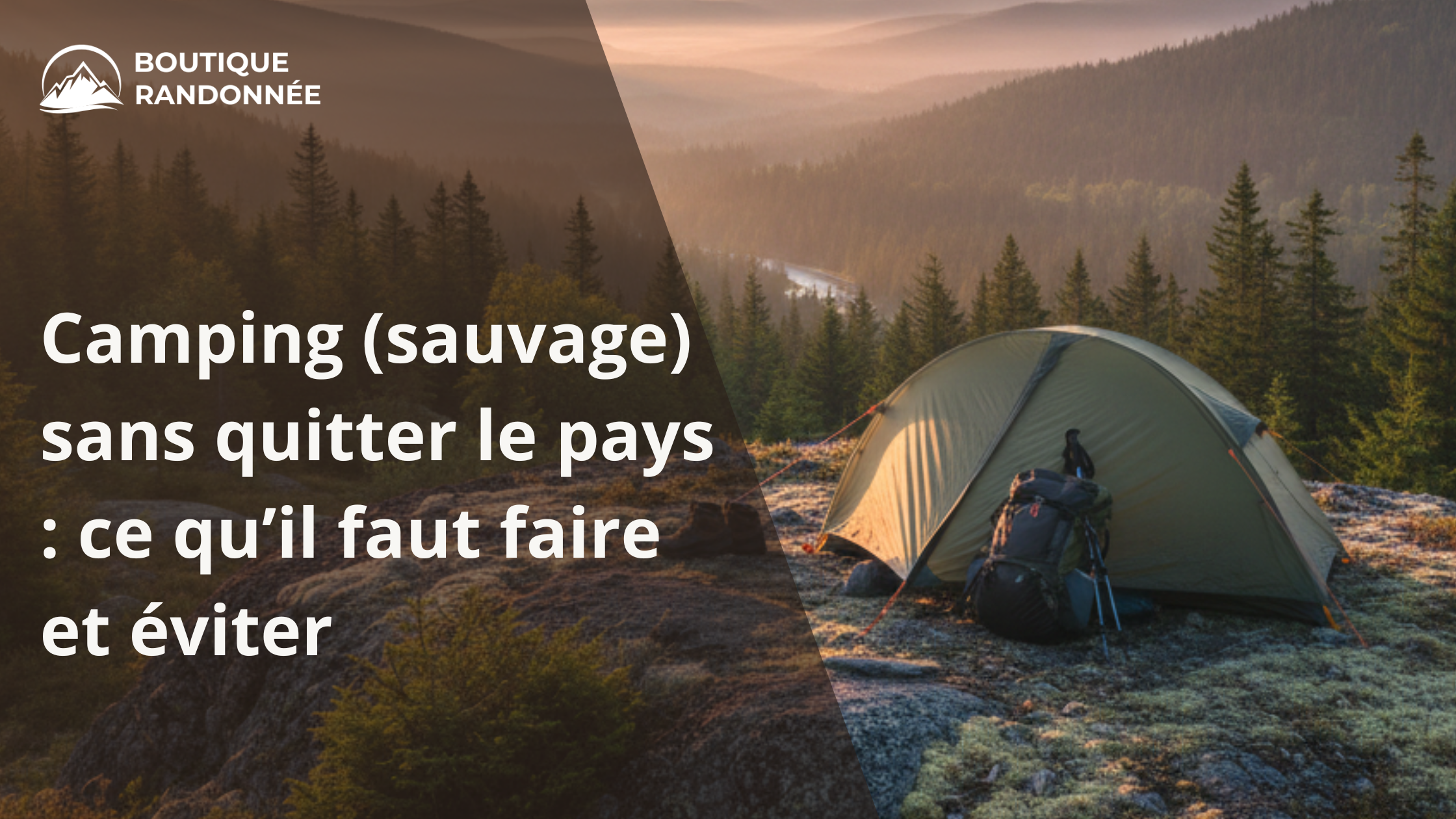
Sleeping under the stars, waking up surrounded by nature, far from the noise and crowds… Wild camping is a dream. But between what's allowed, tolerated, or forbidden, it's easy to get lost. Before pitching your tent, it's best to know the rules to enjoy the adventure while respecting nature and the law.

Wild camping: allowed or not?
Wild camping, meaning setting up camp for several days in the same place as in a campsite (tent, chairs, table, visible setup), is generally prohibited or heavily regulated. However, bivouacking , which is more discreet and temporary, is often tolerated under certain conditions.
The key: discretion, respect for the premises and limited duration.
For lightweight camping, discover our lightweight hiking tents
Wild camping vs bivouacking: what's the difference?
The confusion often stems from this. However, these two practices are not viewed in the same way.
Wild camping:
- Installation for several days
- Equipment laid out (furniture, awning, kitchen…)
- Visible and prolonged occupation of a place
The bivouac:
- Installation for overnight stays only
- Arrived late, left early
- Minimal equipment
- Maximum discretion
Ideal for bivouacking: compact sleeping bags and lightweight mattresses

The basic rules to follow when bivouacking
Even when bivouacking is tolerated, certain rules apply almost everywhere:
- Settle in late and leave early
- Choose a discreet location, away from roads and houses.
- Leave no trace (waste, fire, damage)
- Avoid protected or prohibited areas.
- Respect the wildlife and flora
Bring a hiking stove rather than making a fire.
Natural parks and protected areas
Protected natural areas often have specific rules. In some parks, bivouacking is only permitted near shelters or in designated areas. In others, it is completely prohibited.
Before setting off, always consult the local regulations of the park or nature reserve in question.

What if you chose a campsite?
If you have any doubts, campsites remain the simplest and most peaceful option. Municipal campsites , farm campsites, or campsites in the heart of nature: the choice is vast and allows you to enjoy the outdoors while remaining within a permitted area.
Asking permission from a private owner can also be a simple and respectful solution.
Essential equipment for responsible camping
Good equipment facilitates discretion and limits the impact on the environment.
- Lightweight tent
- Suitable sleeping bag
- compact mattress
- Headlamp
- Portable cooking system
- Garbage bag / waterproof bag

What you absolutely must avoid
Some practices harm nature and can result in fines:
- Lighting a fire in an unauthorized area
- Leaving waste
- Camping near houses or roads
- Degrade vegetation
- Making noise or disturbing wildlife
In summary
Extended wild camping is rarely permitted, but discreet and responsible bivouacking is often tolerated. The golden rule: respect, discretion, and minimal impact. Prepare well, gather local information, and equip yourself wisely.
Find all the equipment for light and responsible bivouacking at Boutique Randonnée .