
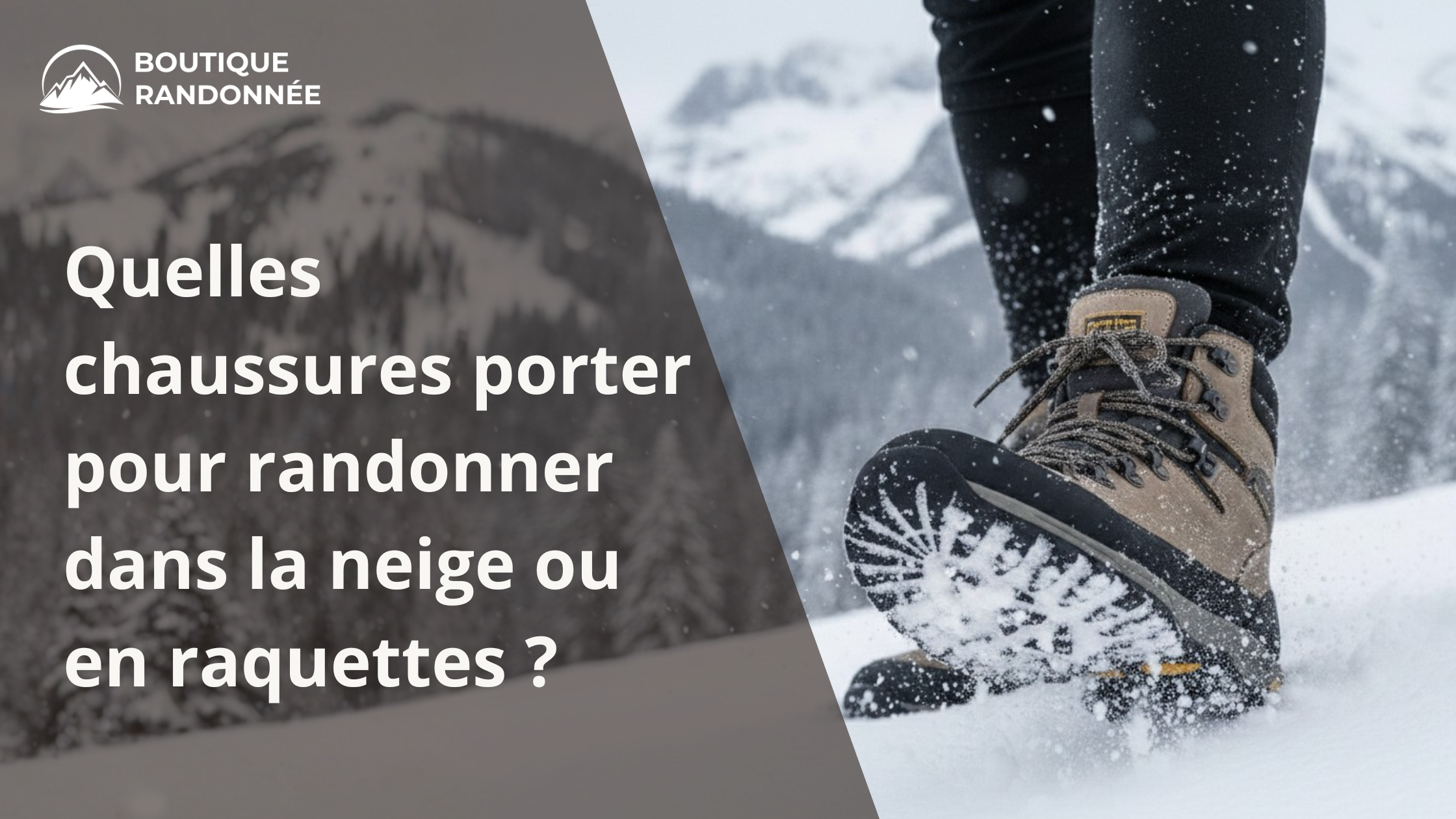
What shoes should I wear for hiking in the snow or snowshoeing?
True hiking enthusiasts know: the cold isn't an obstacle… it's a new adventure. Snowy landscapes transform every outing into a unique experience. But to enjoy it without suffering, one thing makes all the difference: your shoes .
At Boutique Randonnée , we guide you to choose the ideal equipment to keep your feet warm, dry and stable , whether you are walking on a snowy trail or snowshoeing.
Choosing your shoes for hiking in the snow
When the temperature drops below zero or the ground turns white, not all hiking boots are created equal. You need to focus on thermal protection, waterproofing, and grip .
A high shaft for protection and support
The basics are a pair of high-top hiking boots.
They allow:
-
to prevent snow from penetrating
-
to support the ankle
-
to limit the risks of twisting or slipping on wet or unstable ground

Waterproof but breathable
Even in winter, we sweat during exertion. Good winter footwear should have a waterproof and breathable membrane (such as Gore-Tex or equivalent).
It blocks external water while allowing internal moisture to escape, thus preventing wet and cold feet.
Thermal insulation, the key to comfort
On snow, the cold comes from above as much as from the ground. Winter hiking boots are designed with:
-
a warm lining
-
insulating materials
-
a design that limits heat loss
Result: your feet stay at a good temperature, even during breaks.
A sole that really grips
Safety also depends on the sole:
-
marked cleats
-
non-slip rubber
-
good grip on frozen ground or packed snow
For icy sections, also consider adding snow crampons under your shoes for maximum stability.
What shoes are best for snowshoeing?
In snowshoes, the criteria are similar… but even more demanding in terms of support and rigidity.
The essentials
To complement your snowshoes :
-
High stem required
-
waterproof/breathable membrane
-
good thermal insulation
Even though snowshoes provide flotation in powder snow, your shoes must still perform well on sections without snowshoes.
Stability and rigid sole
Opt for a hiking boot with a relatively rigid sole:
-
improved comfort on uneven terrain
-
improved fit in snowshoe bindings
-
Fewer adjustments mid-ride (and fewer frozen fingers!)

Adapting your shoes for winter hiking
Do you rarely go out in winter? You can adapt your current shoes instead of investing right away.
Reinforce the waterproofing
-
waterproofing spray
-
gaiters
-
waterproof overtrousers
Improve adhesion
For frozen or icy ground:
-
snow crampons
-
non-slip insoles
Boost insulation
Thermal comfort also depends on:
-
warm technical socks
-
thermal or wool insoles

The equipment makes all the difference
A successful winter hike is a good balance between suitable footwear, technical accessories and safety .
At Boutique Randonnée , we select for you:
- and all hiking and camping equipment
Enough to face winter with complete peace of mind.
So, whether you're a seasoned explorer or a fan of snowy walks… adjust your poles, tighten your laces, and enjoy the magic of winter hiking.