
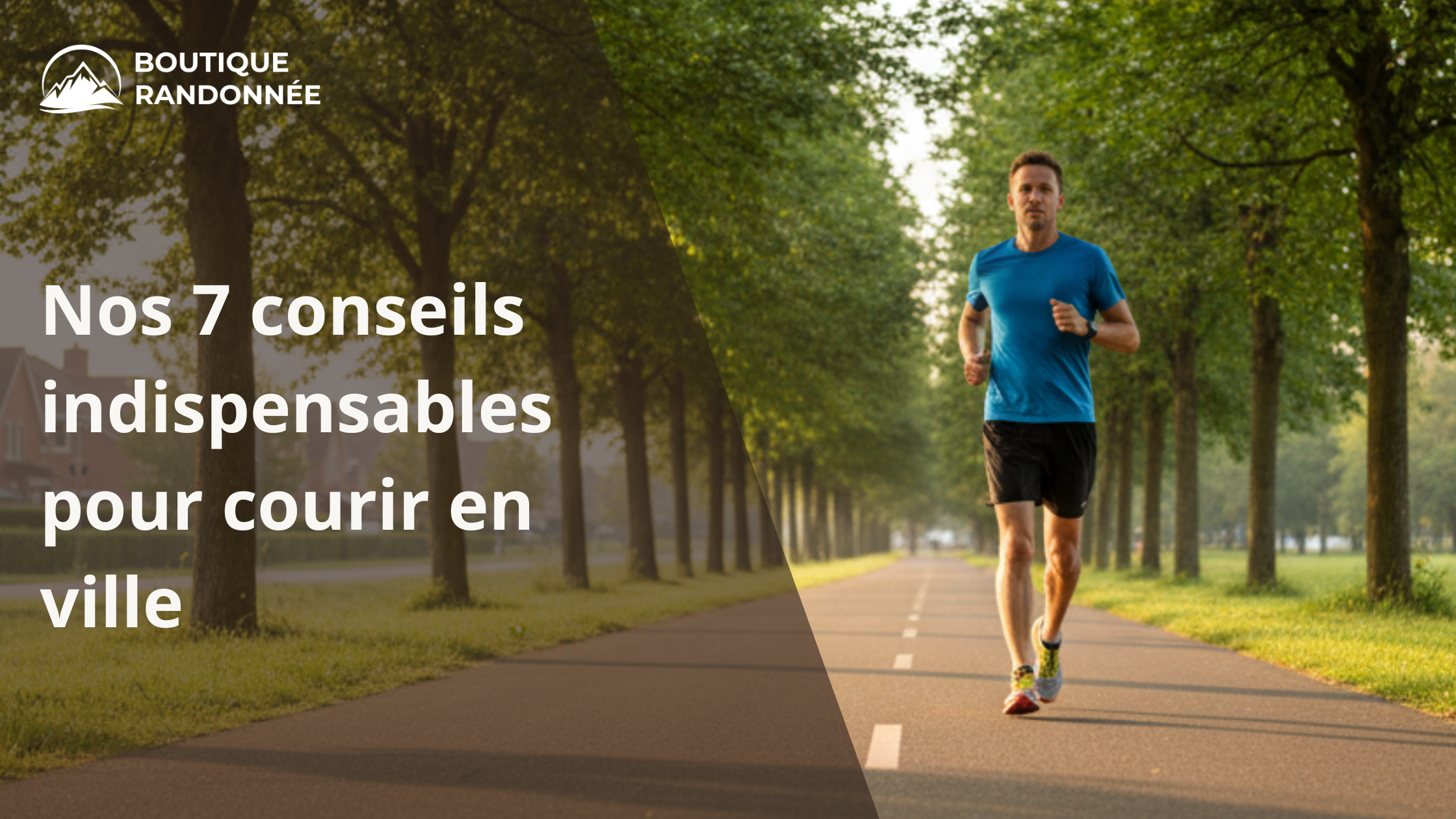
When we think of outdoor sports , we often picture forest trails or mountain ridges. Yet, running is also perfectly suited to the city. Sidewalks, parks, riverbanks, stairs… the urban environment can become a veritable playground, provided you adopt a few good habits.
Running in the city simply requires a little planning to ensure safety, comfort, and efficiency. Here are our 7 essential tips to transform your urban outings into successful workouts.

1. Plan your route
Planning your route in advance helps you avoid crowded areas, dangerous intersections, or unpleasant sections. You can choose quiet streets , riverbanks, parks, or residential neighborhoods for a more peaceful run.
This also helps you manage your distances and elevation gain. Using a GPS watch or app allows you to structure your workouts. Remember to wear shoes suitable for running on hard surfaces ; you can see, for example, our lightweight walking shoe .

2. Choose the right time
The city is vibrant, sometimes too much so. Heavy traffic, pollution, and crowds can make certain times of day less pleasant. Running early in the morning or later in the evening allows you to avoid the crowds and enjoy cleaner air.
These time slots are also quieter and safer for maintaining your pace without interruption. Adapt your clothing to urban temperatures, often higher than in nature, with breathable technical shorts available in our hiking shop .
3. Travel light… but be well-equipped
Even for a short outing , certain essentials shouldn't be forgotten. An ID, a charged phone, and some cash can make all the difference in case of an unexpected event.
To carry your essentials, a running belt or a small, lightweight bag is ideal. Our shop offers compact and practical hydration solutions to keep you hydrated comfortably during exercise.

4. Ensure your safety
In urban areas, it's important to remain visible and alert. Wear reflective clothing if the light is low and stay in well-lit areas.
Avoid running completely isolated from your surroundings. Keeping one ear free allows you to anticipate vehicles, bicycles, or other road users. For nighttime runs , a lightweight headlamp can be useful; it's also available in our shop.
5. Vary the surfaces
Running solely on asphalt puts significant stress on the joints. In the city, take advantage of parks , dirt paths, gravel tracks, or even stairs to vary your running surface.
Alternating surfaces develops balance and coordination, and reduces repetitive strain. It also strengthens your muscles and improves your overall performance.

6. Explore the green spaces
Cities are often full of parks, public gardens , or landscaped riverbanks. These areas offer a calmer setting, fresher air, and a surface that is often softer underfoot.
Running in these spaces allows you to escape mentally while staying close to home. A good pair of versatile shoes from our running and outdoor collection makes the transition between asphalt and trails easier.
7. Be creative
The city offers numerous training opportunities. Stairs, benches, low walls or natural slopes can complement your workout with muscle strengthening exercises.
Varying your routes and incorporating these elements prevents routine and stimulates your progress. The urban environment can become a complete training ground , for both cardio and strength training.

Running in the city is an excellent alternative to running in nature, provided you are well prepared. With the right equipment, available in our hiking shop , you can transform every urban outing into an effective and safe workout.