
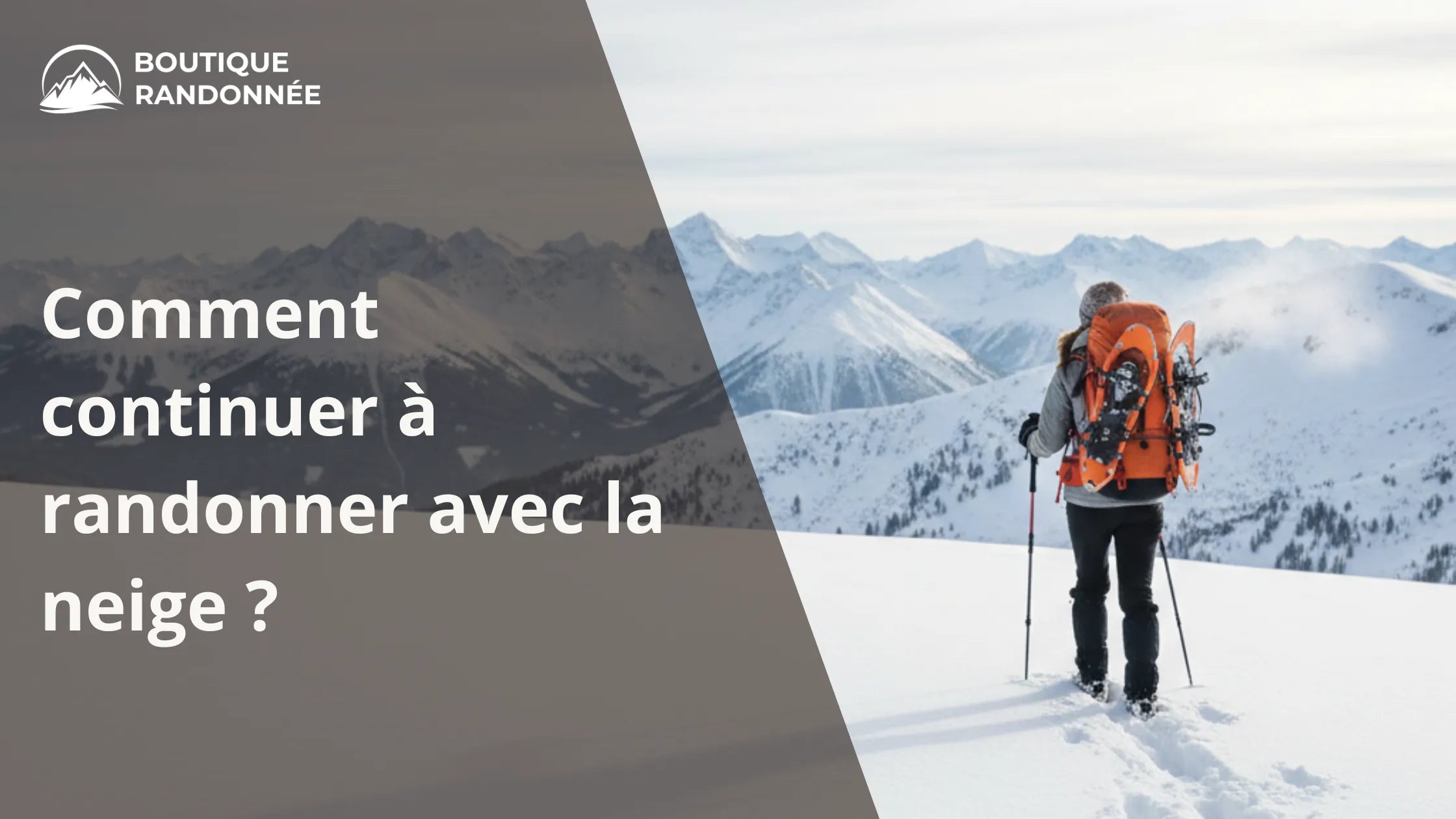
The landscapes are blanketed in white, silence settles in the mountains, and winter transforms the trails we know so well. For many, it signals the end of the season. Yet, with a little adaptation and the right equipment, winter hiking can become one of the most beautiful ways to enjoy nature.
Fresh snow, frozen ground, low temperatures… each condition requires a different approach. At Boutique Randonnée , we support those who love hiking year-round. Here are our tips for continuing to hike when snow is everywhere.

Fresh, powdery snow: snowshoes are recommended.
When the snow is fresh, light, and not yet fully packed, walking quickly becomes tiring without the right equipment. It is in these conditions that snowshoes become essential.
Attached to the bottom of your shoes , they increase the support surface and allow you to stay on the ground, without sinking in with each step. They facilitate progress, both uphill and downhill, and make the effort more consistent.
Snowshoes are particularly suitable:
- to the ungroomed trails
- to forested or mid-mountain areas
- for leisurely or challenging winter hikes
See our selection of snowshoes for hiking .
For added stability, especially on slopes or uneven terrain, the use of poles is highly recommended. They improve balance and reduce leg strain over longer periods.

Hard snow, frost and icy patches: crampons become essential
When the snow has been compacted by wind or foot traffic, or when temperatures drop sharply, the ground can become hard, even icy. In these conditions, snowshoes lose their effectiveness, and snow crampons take over.
Lightweight and compact, they attach directly to the bottom of hiking boots . Their metal spikes provide much better grip on frozen snow or ice, without affecting walking.
Cleats are ideal for:
- the frozen trails
- shaded areas
- winter hikes on hard terrain
Discover our snow crampons for hiking .
An important tip: make sure your shoes have a sufficiently rigid sole for good crampon support, and regularly clean the points to prevent snow from accumulating there.

Protect yourself from the cold: appropriate shoes and clothing
In winter, thermal comfort plays a central role. Having cold feet or a cold body can quickly cut short an otherwise well-prepared outing.
Depending on the type of hike and the temperature, après-ski boots can be perfectly suited for winter walks, snowshoeing, or less technical terrain. They offer good insulation, protect against moisture, and ensure adequate grip on snow.
See our après-ski boots for winter .
To complete your gear, heated clothing is an excellent solution when the cold becomes more intense or for people particularly sensitive to low temperatures. Heated jackets, down jackets, or vests provide consistent and adjustable warmth, while remaining discreet under an outer layer.
Discover our heated clothing for winter hiking.
To learn more about choosing shoes, we also recommend reading our article: What shoes to wear for hiking in the snow or snowshoeing?

Snowshoes or crampons: which should you choose?
In reality, winter conditions often change throughout the day. Soft snow in the morning can become hard in the afternoon, or vice versa. That's why it's strongly advised to always carry a pair of crampons in your pack, even when snowshoeing.
Lightweight and compact, they can make a difference on a tricky passage and significantly improve safety.

In conclusion
Hiking in the snow requires a bit more preparation, but in return offers unique landscapes and an incomparable atmosphere. With snowshoes , crampons , appropriate footwear , and well-chosen clothing , winter becomes a season in its own right for hiking.
At Boutique Randonnée , we select reliable equipment to accompany you on the trails, whatever the conditions.