
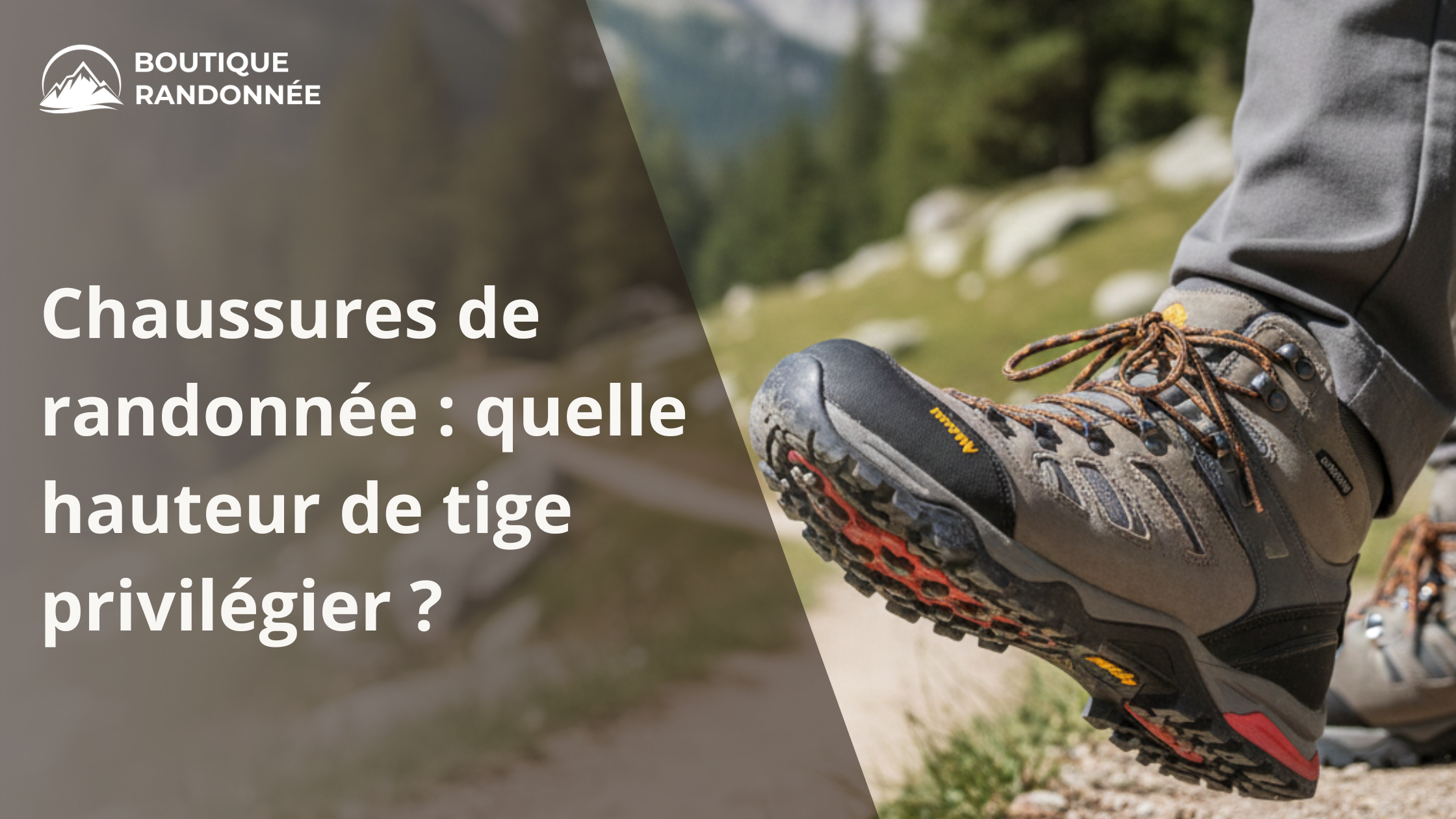
Guide to choosing the right hiking shoe upper
Choosing hiking boots isn't just about size or style. The real deciding factor on the trail is the intended use: type of trails, pack weight, duration of outings, weather... All these elements influence the technical features to prioritize, including the sole, waterproofing, rigidity, and especially the shaft height.
Low, mid, or high shaft – each configuration meets specific needs. Shaft height plays a key role in ankle support, stability, freedom of movement, and level of protection. Choosing the right shaft means hiking more comfortably, more efficiently, and with less risk.

The low-cut design: freedom and lightness
The low-cut trekking shoe stops below the ankle, allowing for a wide range of motion. It's appealing due to its lightness, flexibility, and immediate comfort. You feel less strain, which makes walking fluid and natural, especially on easy or less technical trails.
However, this freedom has a downside. The ankle is poorly protected against uneven terrain, stones, or roots. Support is limited if the pack is heavy or if the terrain becomes unstable. Low-cut boots are therefore ideal for walks, brisk walking, and easy hikes .
Discover our model adapted to this type of activity: Men's Hiking Shoes - Ultra Strong & Waterproof | Mountain & Trekking .

The medium shaft: the versatile compromise
Offering a perfect balance between freedom and protection, the mid-cut shoe , often called a "mid," represents an excellent compromise. Its collar reaches the ankle bone, providing better ankle support while maintaining good flexibility. It offers more security than a low-cut shoe, without the rigidity of a high-cut model.
This format is suitable for both day hikes and multi-day treks, as long as the terrain remains moderately technical. It adapts to varied paths, reasonable elevation changes, and medium-weight packs.
For this type of adventure, discover our Men's Waterproof Hiking Shoes - Trekking & Outdoor model.

The high shaft: support and safety
Higher-cut, stiffer, and more robust, high-top hiking boots offer optimal ankle support. They limit twisting and provide reassurance on rough terrain, especially when fatigue sets in or the backpack is heavy. Reinforcements are generally more substantial, offering better protection against impacts.
Often equipped with a waterproof membrane, it is perfectly suited to long hikes , treks, and technical or unstable terrain. It excels in the mountains, on scree slopes or steep paths.
To explore all our models according to your body type and activity, check out our men's hiking shoe collection and our collection of women's hiking shoes .

In summary: which stem for which hike?
The low-cut design promotes lightness and freedom of movement on easy terrain. The mid-cut design offers a good balance between comfort and support for versatile hikes . The high-cut design prioritizes stability, protection, and security on technical trails and long outings.
The right choice therefore depends on your activity, the terrain, and the load you carry. A well-fitting shoe transforms the walking experience and protects your joints in the long run.

To go even further, consider appropriate hiking socks : they play a key role in comfort, moisture management, and blister prevention. Good equipment always starts with the basics.